

Many Minnesota business owners operate with commercial auto coverage that no longer matches their actual needs. At Variant Insurance Group, we’ve seen firsthand how quickly a policy can become outdated as your fleet grows or your operations shift.
A thorough commercial auto policy review takes just a few hours but can save you thousands in unnecessary premiums or prevent costly coverage gaps. This guide walks you through exactly what to evaluate and when to make changes.
Coverage Types That Actually Protect Your Minnesota Business
Liability Coverage Meets Minnesota’s Legal Minimums
Minnesota requires $30,000 per person and $60,000 per accident for bodily injury liability, plus $10,000 for property damage. These minimums satisfy state law, but they fall dangerously short for most commercial operations. A serious injury claim can easily reach $100,000 or more in medical costs alone, leaving your business responsible for amounts far beyond your coverage limits. Most commercial operations should carry at least $1 million in liability coverage-a modest increase that costs only $50 to $100 more per month than minimum limits. That small premium difference protects your business from exposure that could exceed hundreds of thousands of dollars in a single incident.
Collision and Comprehensive Coverage for Your Vehicles
Collision coverage pays for vehicle damage from accidents regardless of who caused them, while comprehensive covers theft, vandalism, weather damage, and fire. Many business owners skip these coverages to reduce premiums, but that decision backfires when a vehicle is damaged or stolen. A $40,000 truck with a $1,000 deductible typically costs $80 to $120 monthly for both coverages combined (depending on location and claims history). Without this protection, you absorb the full replacement cost immediately when an accident or theft occurs. The math is straightforward: paying $100 monthly for collision and comprehensive costs far less than replacing a vehicle out of pocket.
Uninsured and Underinsured Motorist Protection
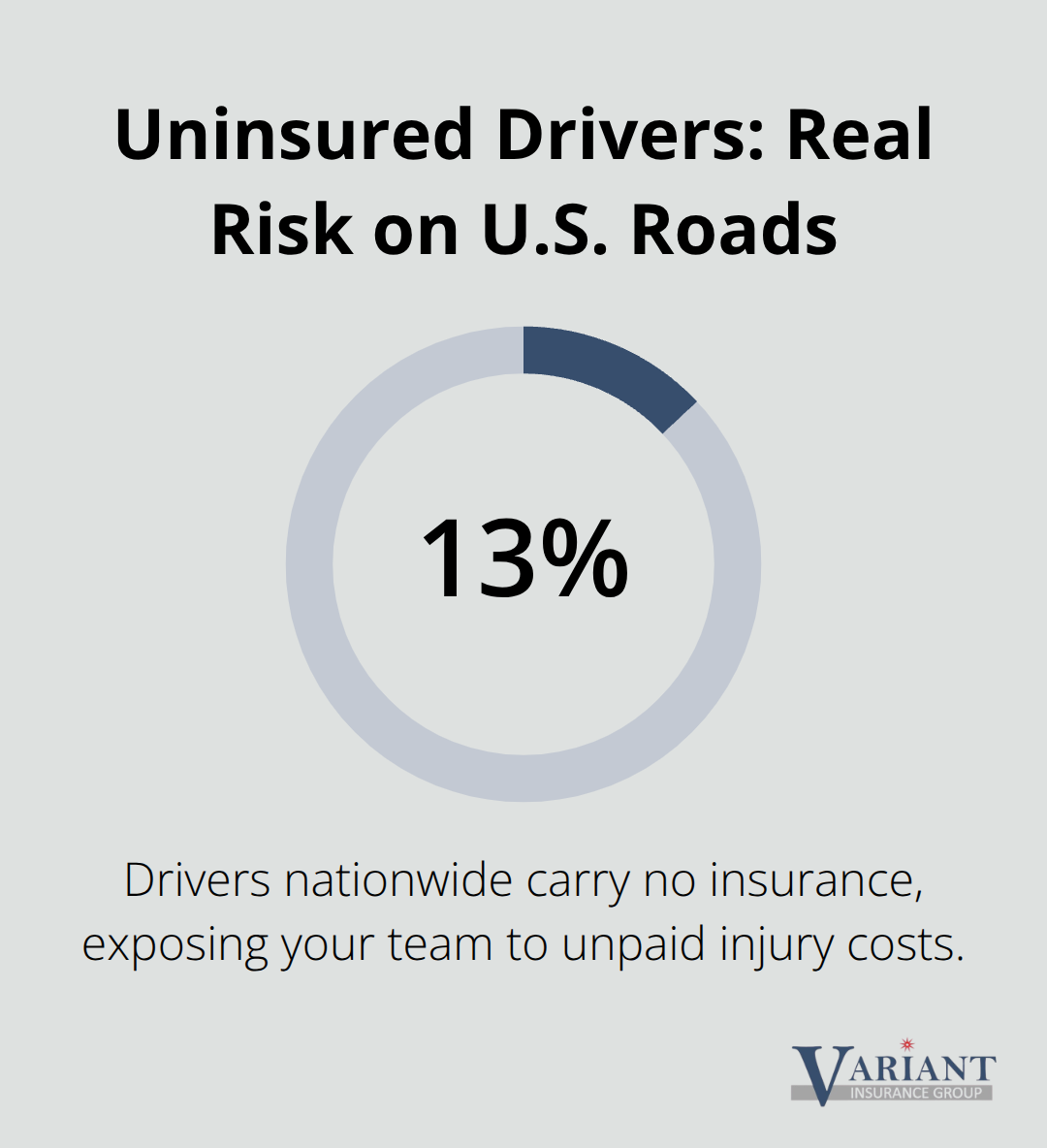
Minnesota requires uninsured motorist coverage with minimums of $25,000 per person and $50,000 per accident. This coverage protects your drivers when an at-fault driver lacks adequate insurance-a real risk since roughly 13% of drivers nationwide carry no insurance at all. Your employees receive payment for injuries even when the other driver cannot pay.
Many businesses operate with only these minimum limits, which creates significant gaps if multiple employees suffer injuries in one accident. Your actual coverage needs depend on your vehicle types, employee count, routes, and whether you transport clients or equipment. A landscaper with one truck faces different exposure than a cleaning service operating five vans with multiple employees per vehicle, and your policy should reflect that difference.
When Your Policy No Longer Fits Your Business
Fleet Growth Outpaces Your Coverage Limits
Your commercial auto coverage was right when you bought it, but business conditions change faster than most owners update their policies. A landscaping company adds two new trucks and keeps the same coverage limits from when they operated a single vehicle. A service business expands into a new region and fails to adjust their policy to reflect increased driving exposure. These gaps create real financial risk. If your fleet has grown, your routes have expanded, or your employee count has increased, your current liability limits may no longer protect your business adequately. The $1 million liability limit that seemed generous for one vehicle becomes insufficient when you operate five vehicles across multiple routes.
Equipment and Attachments Need Specific Protection
If you’ve added specialized equipment to your trucks-bucket lifts, generators, or storage systems-your standard collision coverage may not protect those attachments in an accident. Equipment damage can cost $15,000 to $30,000 or more, and your basic policy likely won’t cover it without an endorsement. A thorough review identifies which attachments need separate coverage and which endorsements your policy requires to protect your full investment.
Claims History Signals the Need for Rate Shopping
When your business files a claim, your insurer adjusts your rates at renewal, sometimes significantly. According to S&P Global data, commercial auto liability reported a net combined ratio of 113.0% in 2024, meaning insurers paid out more in claims than they collected in premiums, which keeps rates under upward pressure across the industry. If you’ve had an accident in the past two years, comparing quotes from multiple carriers before your renewal date becomes essential-different insurers price claims history differently, and you may find substantially lower rates elsewhere.
Premium Increases and Deductible Optimization
If you’ve noticed your premiums climbing year after year, that’s often a sign that your coverage structure isn’t optimized for your actual risk profile. A licensed agent who specializes in commercial auto can identify whether you’re paying for coverages you don’t need or missing protections that would cost less to add now than to claim later. Your deductible choices matter too: raising your deductible from $500 to $1,000 typically reduces your monthly premium by 10% to 15%, but only if you can afford that out-of-pocket amount when a claim occurs. The goal is matching your coverage, limits, and deductibles to what your business actually needs and what you can realistically afford when something goes wrong.
Moving Forward With Your Review
These warning signs point toward one clear action: a comprehensive policy review that compares your current protection against your actual business operations. The next section walks you through exactly how to conduct that review and what specific questions to ask your insurance provider.
How to Compare Your Commercial Auto Options
Start with your current policy documents and renewal notices from the past three years. You need the declarations page showing your liability limits, deductible amounts, and any endorsements currently active on your policy. Next, contact at least three different carriers and request quotes using identical coverage specifications. This means asking each insurer for the same liability limits, deductible levels, and endorsements so you can compare apples to apples. Many business owners request quotes without specifying their exact current coverage, which produces quotes for different protection levels and makes comparison impossible.
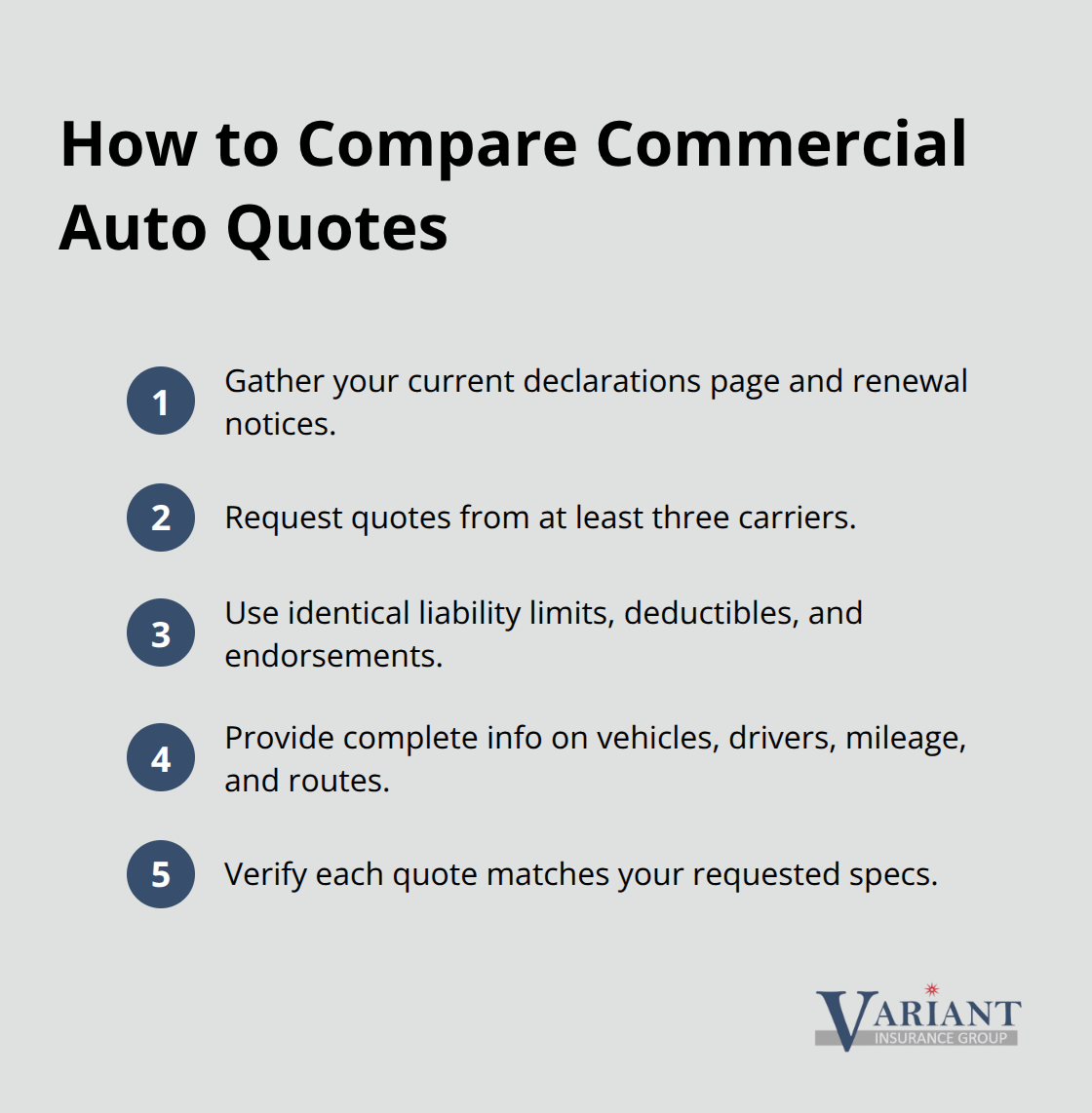
When you request quotes, tell each carrier about any claims or accidents in the past three years, your employee count, vehicle types, annual mileage, and specific routes or service areas. Incomplete information leads to inaccurate quotes that won’t reflect your actual renewal price. Pay special attention to how different carriers price your claims history. According to S&P Global data, commercial auto liability combined ratios are forecast to move from 104.4 in 2026 to 106.3 in 2029, which means carriers price conservatively and may weight your claims differently. One insurer might add a 25% surcharge for a minor accident while another charges 40%, creating significant premium differences across the market.
Deductible Strategy Saves Real Money Monthly
Your deductible choice directly impacts your monthly premium, and most business owners leave money on the table with the wrong amount. A $500 deductible versus a $1,000 deductible typically creates a 10% to 15% monthly premium difference. For a business paying $300 monthly, that’s $30 to $45 saved each month or $360 to $540 annually. The question isn’t whether a higher deductible saves money-it does-but whether you can afford that out-of-pocket amount without damaging your business cash flow.
If you operate with tight margins and a single accident would strain your finances, stick with a lower deductible even though it costs more monthly. If you maintain adequate reserves and can absorb a $1,500 deductible without hardship, the higher deductible makes financial sense. Review your claims history when making this decision. If your business filed zero claims in five years, accepting higher deductibles costs less overall than maintaining low deductibles you’ve never used. Conversely, if you filed two claims in three years, lower deductibles provide better protection against future out-of-pocket costs.
Endorsements That Match Your Operations
Many business owners pay for endorsements they don’t need while missing coverage they should have. Hired and non-owned auto coverage protects your business when employees use personal vehicles for work tasks, but you don’t need this if all your business driving happens in company-owned vehicles. Towing and labor coverage makes sense for remote service areas where your vehicles might break down far from repair shops, but adds unnecessary cost if you operate primarily in the Minneapolis or Saint Paul metro areas with abundant repair options nearby.
Ask your agent which endorsements apply specifically to your operations and which you can safely skip. Equipment attachments (bucket lifts, generators, or storage systems) require separate endorsements to protect them in an accident. Your agent can identify which specific endorsements your policy needs based on your actual business activities and vehicle configurations.
Discounts That Reduce Your Annual Cost
Bundling your commercial auto policy with other business coverage like general liability or property insurance typically yields savings of 5% to 10% on your auto premium. Multi-vehicle discounts apply when you insure multiple vehicles under one policy, and paying your annual premium in full rather than monthly installments usually saves 10% to 15%. Safety equipment discounts reward businesses with telematics systems or dashcams that reduce risk, sometimes providing 5% to 8% savings.
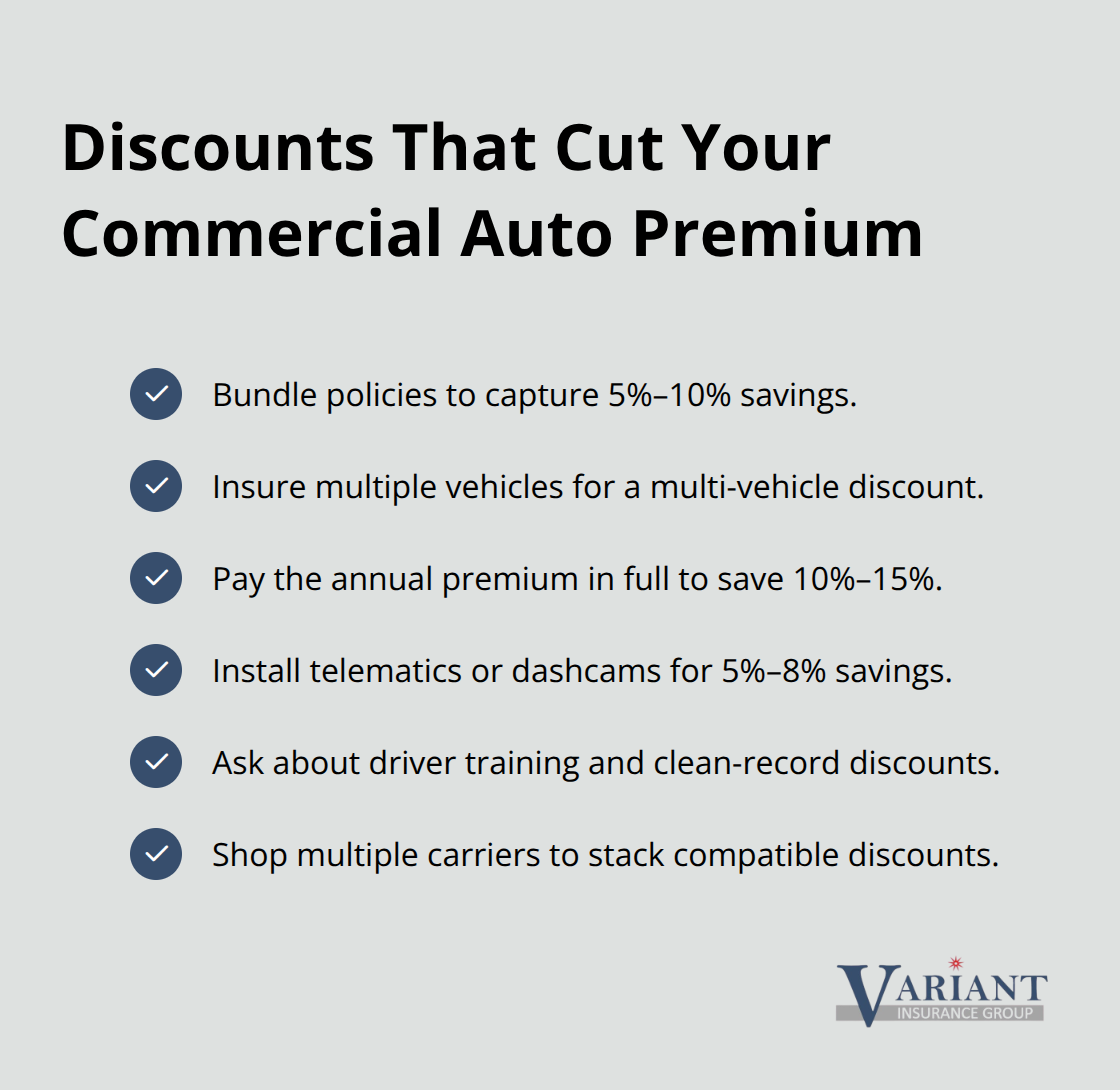
Ask your agent to calculate your total annual cost under different discount combinations rather than focusing on individual discount percentages, since the final premium is what matters to your bottom line. Some carriers offer discounts for driver training programs or clean driving records among your employees. These discounts vary significantly across insurers, which is another reason shopping multiple carriers produces real savings.
Final Thoughts
Your commercial auto policy should match your business operations exactly, not the operations you had two years ago. A single serious injury claim can exceed your liability limits by hundreds of thousands of dollars, exposing your personal assets and business finances to devastating losses. Start your commercial auto policy reviews by gathering your current declarations page and renewal notices from the past three years, then contact at least three different carriers with identical coverage specifications so you can compare actual costs.
Pay attention to how each insurer prices your claims history, since different carriers weight past accidents differently and can produce premium variations of 25% or more. Review your deductible choices against your ability to pay out-of-pocket costs without straining your business, and confirm that your liability limits protect your actual exposure rather than just the minimum required by Minnesota law. The businesses that manage their insurance costs most effectively treat policy reviews as an annual task, not something they do once and forget.
At Variant Insurance Group, we help Minnesota business owners find the right commercial auto coverage at the right price by shopping Minnesota’s top-rated insurance companies to compare your options. Our team reviews your current coverage, evaluates your actual business operations, and finds carriers that price your specific risk profile fairly. Contact us to schedule your commercial auto policy review and discover whether your current coverage works as hard as your business does.
Disclaimer: The information provided in this blog is for general informational purposes only and does not constitute legal, financial, or insurance advice. Coverage options, terms, and availability may vary. Please consult with a licensed professional for advice specific to your situation