

Landlord insurance Minnesota rates vary significantly based on your property and risk profile. At Variant Insurance Group, we’ve helped countless Minnesota landlords understand what drives their premiums and how to manage costs effectively.
This guide breaks down the real factors affecting your rates, shows you what other landlords pay, and reveals concrete ways to lower your premiums.
What Drives Your Landlord Insurance Rates in Minnesota
Location Creates the Biggest Price Gap
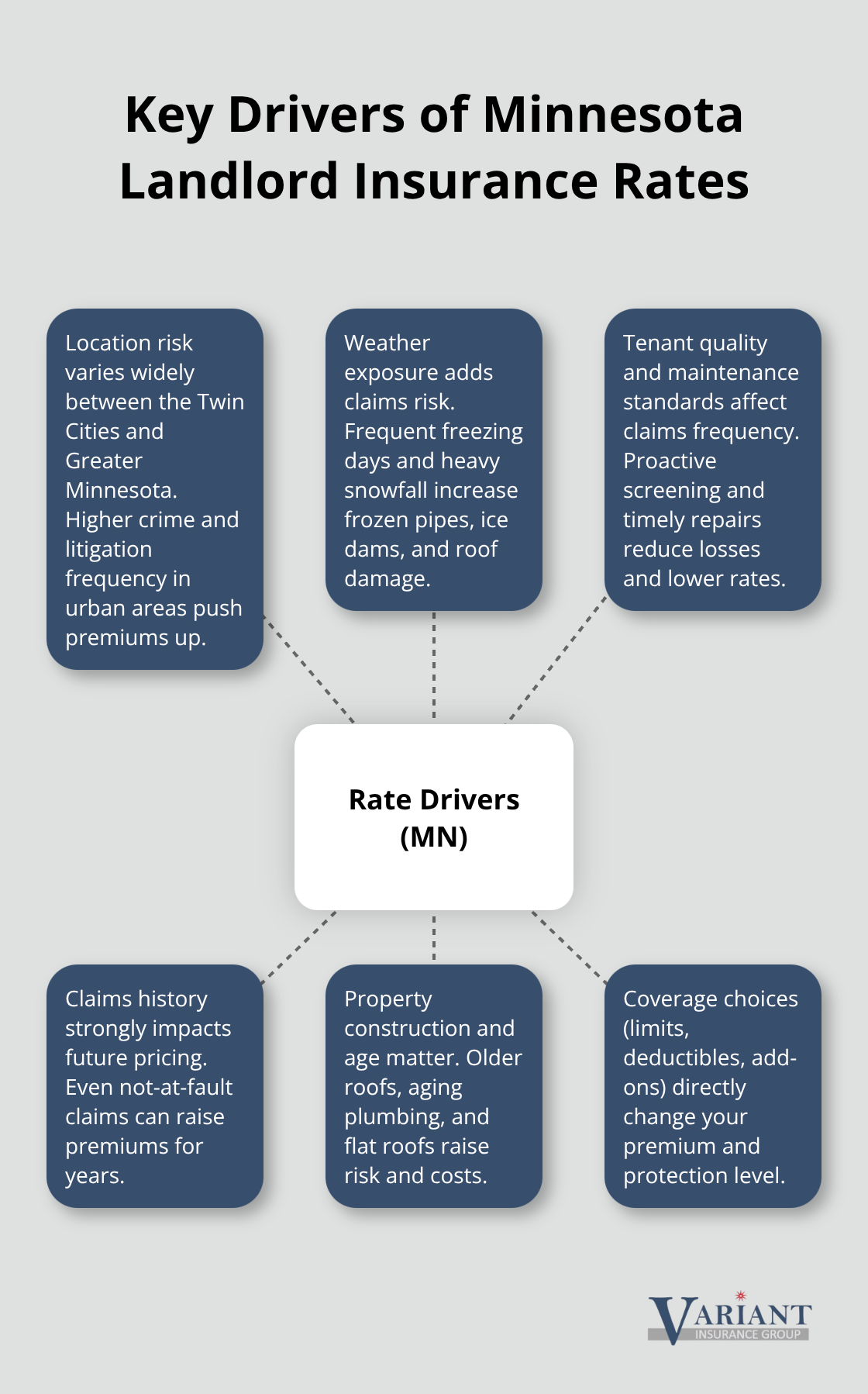
Location is the single biggest factor determining what you pay for landlord insurance in Minnesota, and the difference between neighborhoods can be staggering. In Minneapolis and St. Paul, theft and vandalism claims average around $3,200 per incident, while the same types of claims in Greater Minnesota average about $1,800. This isn’t a minor variance-premiums in the Twin Cities can run 40–60% higher than rural Minnesota because of higher crime rates and increased litigation frequency. The average Minnesota landlord insurance cost sits around $1,469 per year, but that number masks the reality that your actual premium depends heavily on your zip code. A property in downtown Minneapolis faces entirely different risk exposure than one in Brainerd or Willmar, and if you own rental properties in urban areas, you should expect to pay substantially more.
Minnesota’s Climate Adds Hidden Costs
Minnesota’s climate amplifies costs in ways many landlords overlook. The state experiences roughly 170 freezing days annually and 45–55 inches of snowfall, creating persistent risk for frozen pipes, ice dams, and roof damage. Water damage from burst pipes represents a major claim category, and Minnesota’s weather makes this risk unavoidable. Your property type and construction materials also matter significantly-a well-maintained single-family home built with standard materials costs less to insure than a multi-unit building with aging plumbing or a structure with a flat roof prone to ice-dam damage. Older roofs are particularly expensive to cover because replacement costs have climbed dramatically (national property-damage claims average around $11,650, but Minnesota’s weather means roof or water damage often exceeds $25,000).
Tenant Quality and Maintenance Standards Shape Your Rate
Tenant quality directly impacts your rates, though insurers measure this through screening standards and property maintenance rather than personal judgment. Landlords who implement strict tenant screening, maintain properties to code, and respond quickly to maintenance issues file fewer claims and qualify for better rates. A history of claims-even if you weren’t at fault-signals higher risk to insurers and drives premiums up. You control this factor directly through prevention: maintain your property well, screen tenants carefully, and address maintenance issues before they become costly losses. Your claims history becomes the foundation for future pricing, so the actions you take today shape what you pay tomorrow.
What Single-Family and Multi-Unit Properties Actually Cost
Single-Family Rental Premiums Vary by Location
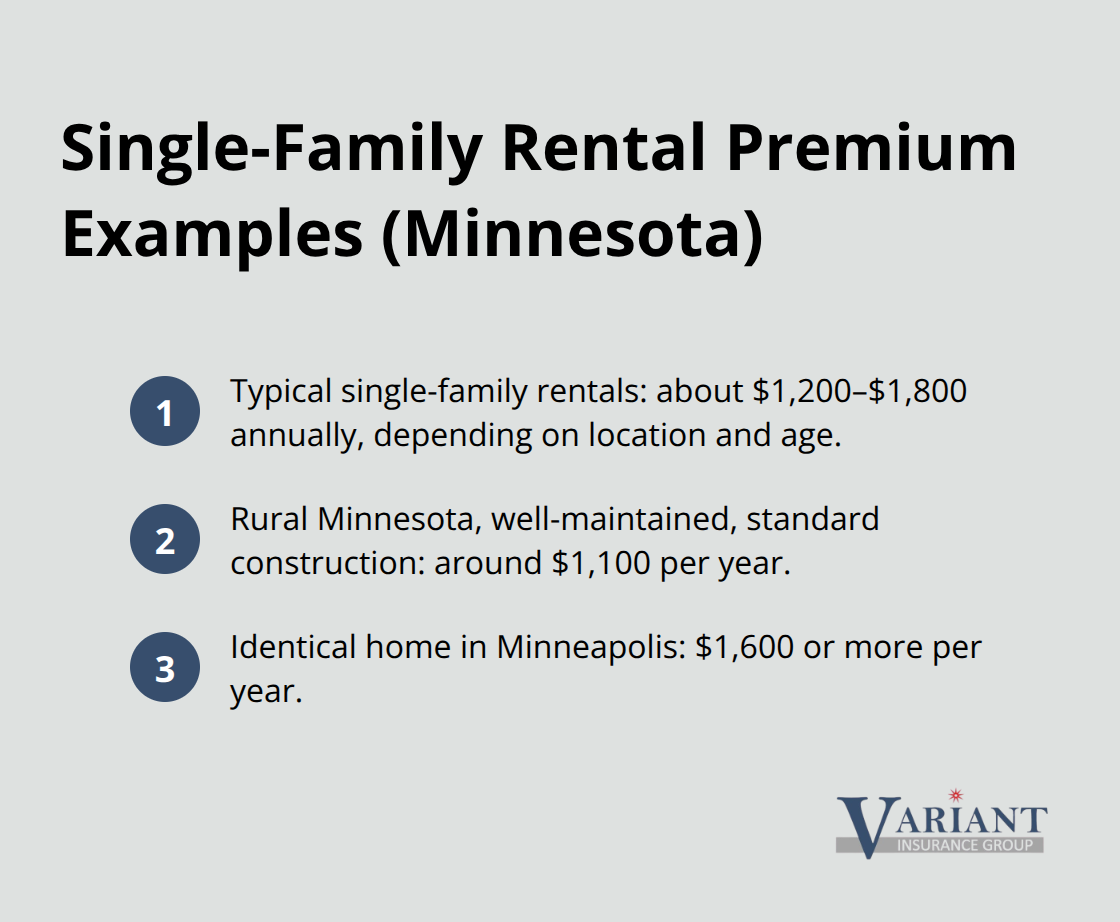
The average Minnesota landlord pays around $1,469 per year for landlord insurance, but this figure masks massive variation based on property type and location. Single-family rentals typically fall into the lower end of this range, often running $1,200 to $1,800 annually depending on where your property sits and how old it is. A well-maintained single-family home in rural Minnesota with standard construction might cost $1,100 per year, while an identical property in Minneapolis commands $1,600 or more. The difference reflects both the higher crime and litigation costs in urban areas and the greater frequency of claims in dense neighborhoods.
Multi-Unit Properties Cost More Per Building
Multi-unit properties face different economics entirely. A duplex or small four-plex costs substantially more because insurers view multiple units as higher-risk exposure-more tenants mean more liability claims, more maintenance points of failure, and greater loss-of-rent exposure when a unit becomes uninhabitable. A typical duplex in Minnesota runs $2,200 to $3,500 annually, while a four-plex can exceed $5,000 depending on condition and location. The per-unit cost actually drops slightly as you add units, but the total premium jumps because you insure more exposure.
Dwelling Coverage Limits Must Match Replacement Costs
Coverage limits and deductibles directly control your premium, and this is where landlords make expensive mistakes. Most Minnesota landlords should carry dwelling coverage limits that match current replacement costs-not the purchase price from five or ten years ago. If your property cost $250,000 to buy but would cost $400,000 to rebuild today due to labor and material inflation, you need $400,000 in dwelling coverage. Underinsuring by $150,000 means you absorb that loss yourself when a major claim hits.
Liability and Deductible Choices Shape Your Bottom Line
Liability coverage of $300,000 to $500,000 per occurrence is standard, but serious injuries can exceed $1 million, making a $1 million umbrella policy worth roughly $150 to $300 annually-genuine protection at a bargain price. Deductibles create the most direct premium savings. Raising your deductible from $500 to $1,000 typically saves 10 to 15 percent on your annual premium. However, only increase your deductible if you can absorb that amount from cash reserves without stress. The math only works if you actually have the money when a claim arrives.
Loss-of-Rent Coverage Protects Your Cash Flow
Loss-of-rent coverage should match your annual rental income or at least cover 6 to 12 months of lost income-this protects your cash flow when major repairs force a unit to sit vacant. These coverage choices matter far more than shopping for the lowest-possible premium. The decisions you make about limits, deductibles, and add-on coverages determine whether your policy actually protects your investment or leaves you exposed when claims arrive.
Three Ways to Cut Your Landlord Insurance Costs
Cutting your landlord insurance premium requires action, not wishful thinking. The most effective strategies address the factors insurers actually price into your rate, and the savings are often substantial if you’re willing to take concrete steps.
Bundle Policies for Immediate Savings
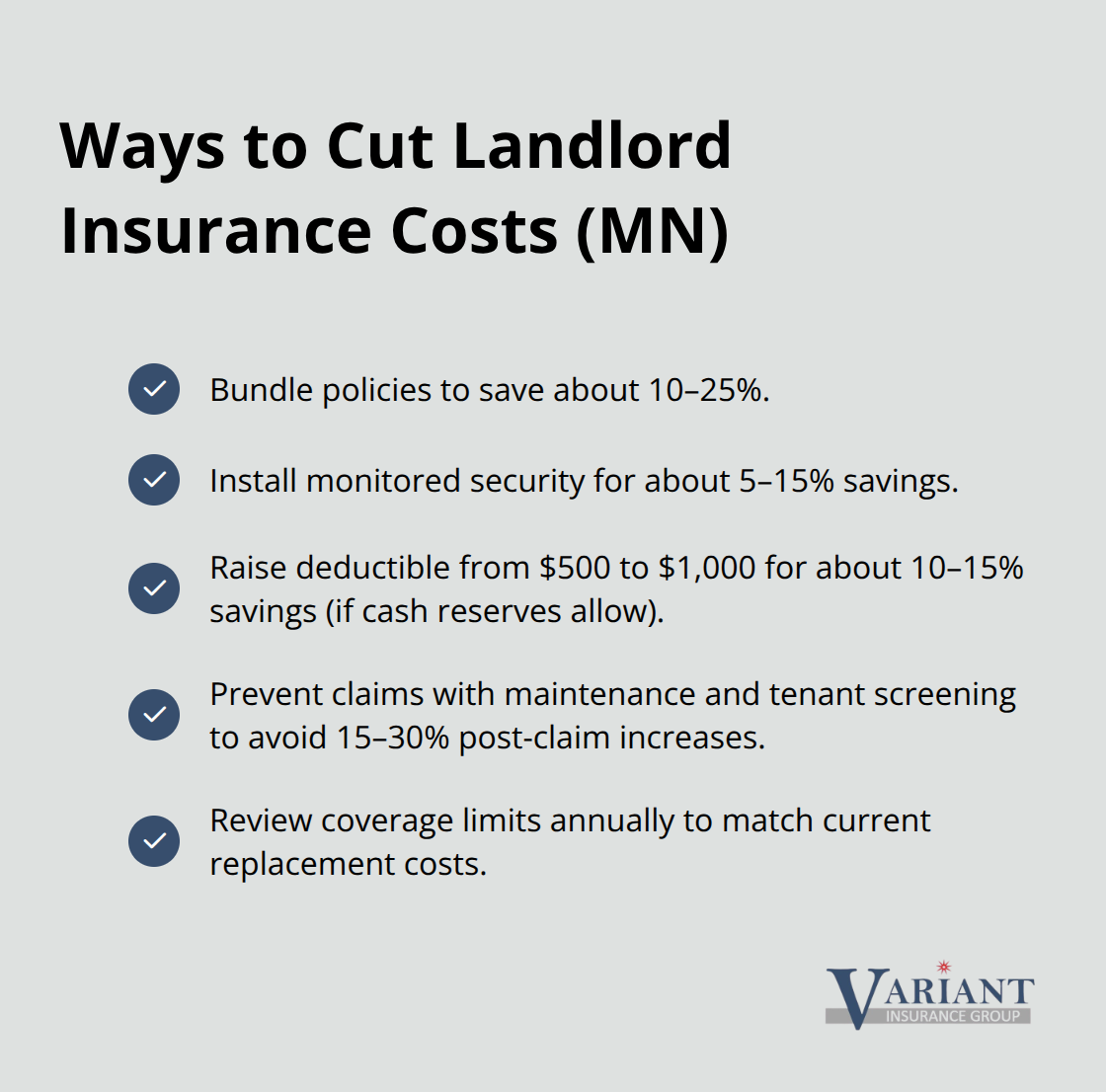
If you carry auto insurance, homeowners coverage, or business liability separately, you’re leaving money on the table. Combining landlord insurance with other policies typically saves 10 to 25 percent on your total premium across all policies. Most Minnesota insurers offer these discounts automatically, so a quick conversation with your agent about what you currently carry can reveal immediate savings.
Install Security Systems and Maintain Your Property
Physical risk reduction through security systems and property maintenance lowers your premium directly. Insurers price theft and vandalism claims heavily in urban Minnesota-claims in Minneapolis average $3,200 per incident-so installing motion-sensor lighting, deadbolts, and security cameras reduces your rate. A monitored security system can lower your premium by 5 to 15 percent depending on your property location and the system’s sophistication.
Storm protection matters equally in Minnesota’s climate. Gutter guards prevent ice dams, downspout extensions direct water away from foundations, and roof maintenance prevents the water damage claims that exceed $25,000 in this state. These investments pay for themselves through lower premiums while protecting your actual property. Document everything you install and notify your insurer, because they won’t reduce your rate if they don’t know about your improvements.
Build a Strong Claims History Through Prevention
Your claims history shapes your future rates more directly than almost any other factor. A single water-damage claim can increase your premium by 15 to 30 percent for three to five years, making prevention worth far more than the cost. Address maintenance issues immediately rather than delaying repairs, screen tenants carefully to reduce liability exposure, and keep detailed records of maintenance and improvements.
If you do file a claim, work with your insurer to document everything thoroughly. The Minnesota Department of Commerce recommends taking photos or video footage of personal possessions and storing documentation in a secure, off-site location, which speeds claims and reduces disputes. When you file a claim, insurers require proof of purchase and a detailed inventory of possessions, including prices, model numbers, and serial numbers.
Adjust Coverage Limits and Deductibles Strategically
Review your coverage limits and deductibles annually. Replacement costs in Minnesota have climbed faster than most landlords realize, so a property you insured three years ago likely needs higher dwelling limits today. Conversely, if you have emergency savings that can cover a $1,000 deductible without stress, raising your deductible from $500 to $1,000 typically cuts your premium by 10 to 15 percent.
These adjustments compound-bundling saves 10 to 25 percent, security systems save 5 to 15 percent, and deductible increases save another 10 to 15 percent. An engaged landlord can reduce total premiums by 25 to 40 percent compared to a passive approach (though actual savings vary based on your specific property and current coverage).
Final Thoughts
Location, climate, and maintenance practices shape landlord insurance Minnesota rates more than any other factors. Properties in Minneapolis and St. Paul cost 40 to 60 percent more than rural Minnesota due to higher crime and litigation costs, while Minnesota’s 170 annual freezing days drive water-damage claims that often exceed $25,000. You control the maintenance factor entirely through prevention and tenant screening, which directly impacts your future premiums.
Bundling policies saves 10 to 25 percent immediately, and installing security systems or maintaining your property prevents the theft and vandalism claims that drive rates up in Minnesota. Adjusting your coverage limits to match current replacement costs and raising your deductible if you have emergency savings compounds these savings further. These actions work together to reduce your total premium by 25 to 40 percent compared to a passive approach.
We at Variant Insurance Group shop Minnesota’s top-rated insurance companies to find landlord policies that match your property and budget. Contact us for a free quote and let us show you what your actual options cost-the difference between a passive approach and an engaged one often exceeds $500 annually.
Disclaimer: The information provided in this blog is for general informational purposes only and does not constitute legal, financial, or insurance advice. Coverage options, terms, and availability may vary. Please consult with a licensed professional for advice specific to your situation