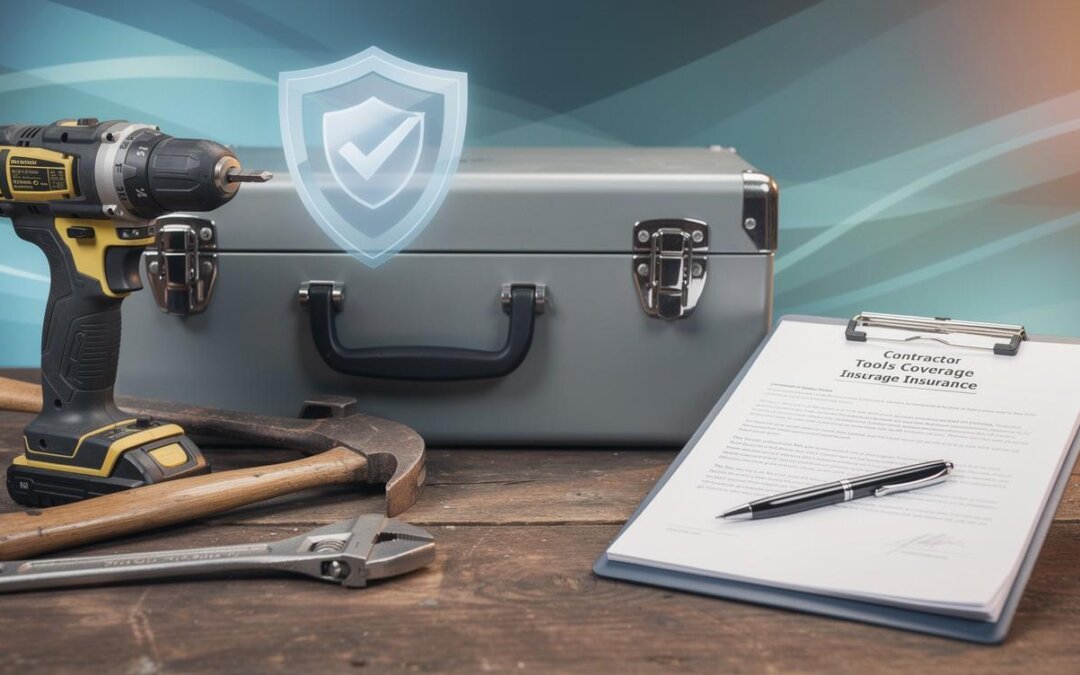
Your contractor tools are expensive investments that keep your business running. Theft, damage, and loss on job sites happen more often than you’d think, and standard business insurance typically won’t cover them.
Contractor tools coverage insurance fills that gap by protecting your equipment when it matters most. We at Variant Insurance Group help Minnesota contractors understand their coverage options so they can focus on the work instead of worrying about replacing stolen or damaged gear.
What Contractor Tools Coverage Actually Protects
Contractor tools coverage is inland marine insurance that protects movable equipment as you travel between job sites. Unlike standard business property insurance, which covers equipment at a fixed location, tools coverage follows your gear wherever the work takes you. Your power tools, hand tools, and specialized equipment spend most of their time in transit or sitting on client properties-not locked in your office. The coverage reimburses you for replacement or repair costs when theft, vandalism, breakage, or weather damage occurs. Most policies cover items valued under $10,000 and less than five years old, which describes the vast majority of contractor equipment. You can choose replacement cost coverage, which pays for a brand-new tool, or actual cash value, which factors in depreciation and costs less monthly. Tools coverage typically runs about $14 per month according to industry averages, making it one of the most affordable protections you can add to your business insurance.
What Equipment Actually Gets Protected
Your hand tools, power tools, and small machinery form the core of what this coverage handles. A carpenter’s circular saw, an electrician’s voltage tester, a plumber’s pipe wrench, or a landscaper’s leaf blower all qualify. The policy covers these items whether they sit in your truck, rest at a client’s property during a project, or stay stored at your workshop. Some policies extend to leased or rented equipment, though you should verify this with your carrier before counting on it. What doesn’t qualify includes vehicles themselves, items older than five years, anything valued over $10,000, and equipment showing wear and tear. If a tool breaks because you dropped it carelessly or used it for something it wasn’t designed for, the claim gets denied.
How Tools Coverage Complements Your Other Policies
This coverage complements general liability insurance, which protects against bodily injury claims, not against your own equipment losses. Theft claims get paid fastest-if someone steals your tools from a job site or your van, replacement costs come straight out of your policy. Vandalism claims work the same way, whether someone deliberately damages your equipment or weather does it.
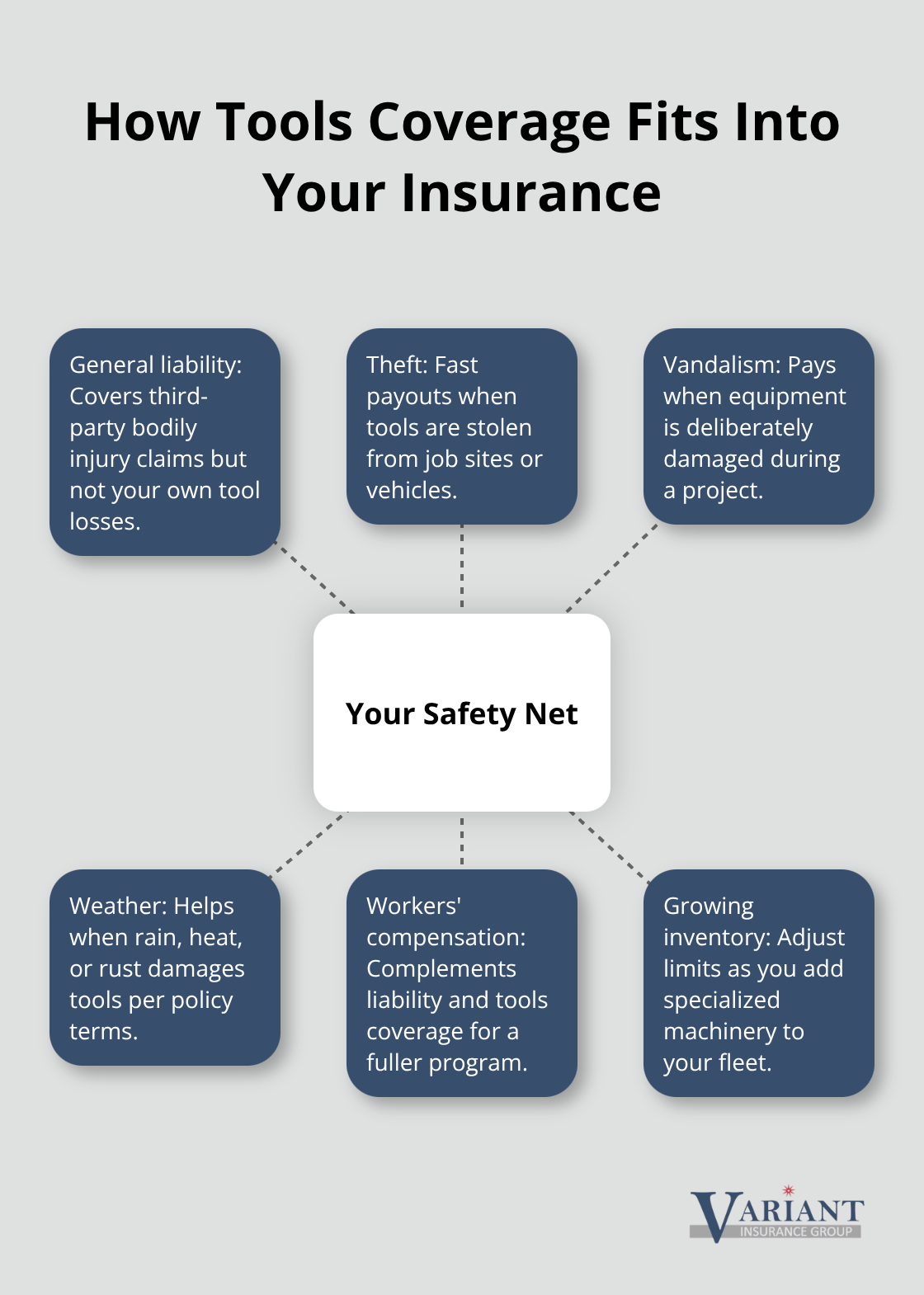
The combination of tools coverage with general liability and workers’ compensation creates a comprehensive safety net for your operation. As your equipment inventory grows or you add specialized machinery to your fleet, your coverage needs will shift.
Why Contractors Need Tools Coverage Now
Theft Costs Contractors Real Money
Equipment theft on Minnesota job sites represents a genuine problem contractors face every year. The National Equipment Register reports that construction equipment theft costs the industry over $300 million annually, and small tools vanish constantly from vehicles and job sites. A single stolen DeWalt drill costs $150 to $300, but losing a complete set of specialized tools can run $3,000 to $5,000 or more. When your tools vanish mid-project, you face two immediate costs: replacement equipment and delayed work that eats into your profit margins.
Standard commercial property insurance won’t help because those policies cover equipment at fixed business locations, not tools traveling between jobs. Your homeowners or personal auto policy definitely won’t cover work equipment. Without dedicated tools coverage, you absorb the full replacement cost yourself, which directly cuts into your bottom line.
Weather and Vandalism Damage Your Equipment Fast
Specialized contractor equipment ages quickly and breaks under real-world job conditions. A carpenter’s miter saw costs $400 to $600 new, but weather damage, concrete dust, and daily wear degrade performance fast. A plumber’s pipe threader or an electrician’s voltage tester represents a specific investment you can’t easily replace with generic equipment.
Weather damage alone-rain seeping into a van, heat warping plastic handles, rust forming on metal-happens regularly in Minnesota’s climate. Vandalism at job sites occurs too, whether someone deliberately damages your tools or theft prevention fails. Tools coverage protects against all these scenarios by paying replacement costs when damage or loss happens, letting you return to work without draining your cash reserves.
Protection Costs Less Than One Replacement
At roughly $14 per month, tools coverage costs far less than replacing even one major piece of equipment once during the year. This protection becomes especially valuable when you consider how quickly specialized tools wear out in Minnesota’s demanding conditions. Your equipment investment deserves the same attention you give to protecting your liability exposure and your workers.
Selecting the Right Coverage Limits for Your Tools
Inventory Your Equipment and Calculate True Value
Walk through your job sites and vehicles with a notepad or phone to list every power tool, hand tool, and piece of specialized equipment you regularly use. Include the brand and model if possible, then research current replacement costs online or through supplier catalogs. A Milwaukee M18 drill runs about $200, a DeWalt miter saw costs $500 to $600, and a full set of hand tools from a quality manufacturer easily reaches $1,500.
Most contractors underestimate their total equipment value by 30 to 40 percent because they forget about items stored at secondary locations or equipment they rarely use. Add everything up, then add 20 percent more to account for items you’ll forget. This total determines your coverage limit, and most policies max out at $10,000 per occurrence, which covers the vast majority of contractor operations. If your equipment inventory exceeds $10,000, you’ll need inland marine coverage instead of basic tools coverage, which offers higher limits but costs more monthly.
Choose a Deductible That Matches Your Risk Tolerance
Deductibles directly affect your monthly premium and your out-of-pocket cost when something breaks or gets stolen. A $500 deductible saves you roughly 15 to 20 percent on your monthly premium compared to a $250 deductible, but it means you absorb the first $500 of any loss yourself. Most Minnesota contractors find a $500 deductible strikes the right balance because tool theft rarely involves just one item, so your claim typically exceeds that threshold anyway.
Understand What Your Policy Actually Excludes
Exclusions are where policies diverge most, and this is where many contractors face disappointment when filing claims. Standard exclusions include wear and tear, intentional damage, items older than five years, and tools valued over $10,000 individually. Some policies exclude leased equipment, while others cover it if you pay slightly higher premiums.
Carefully review what your specific policy excludes before purchasing, and ask your agent directly whether coverage extends to tools left at client properties during active projects. Your agent can walk you through each policy’s specific exclusions and limitations so you understand exactly what happens when you need to file a claim.
Final Thoughts
Contractor tools coverage insurance protects your equipment investment when theft, damage, or loss strikes on job sites. Without this protection, a single stolen drill or weather-damaged saw cuts directly into your profits and delays projects. The coverage costs roughly $14 per month, making it one of the most affordable ways to safeguard your business against equipment losses that would otherwise force you to replace tools out of pocket.
We at Variant Insurance Group work with Minnesota’s top-rated insurance companies to find the right tools coverage for your specific operation. Rather than working for a single insurer, we shop multiple carriers to compare protection and pricing so you get genuine value. Contact Variant Insurance Group to discuss your contractor tools coverage needs, and our team will walk you through available options from carriers that understand Minnesota contractors.
As your business grows and your equipment inventory expands, your coverage needs will shift too. Regular policy reviews keep your limits aligned with your actual equipment value and prevent you from paying for protection you don’t need or leaving gaps in coverage that could hurt you later. Your tools keep your business running, so protecting them deserves the same attention you give to every other aspect of your operation.
Disclaimer: The information provided in this blog is for general informational purposes only and does not constitute legal, financial, or insurance advice. Coverage options, terms, and availability may vary. Please consult with a licensed professional for advice specific to your situation