
Running an Airbnb in Minnesota comes with real liability risks that most hosts underestimate. A guest injury, property damage, or accident on your property can quickly become a financial nightmare without proper protection.
At Variant Insurance Group, we’ve seen too many Minnesota hosts rely solely on Airbnb’s built-in coverage, only to discover critical gaps when they need it most. The right Airbnb liability coverage Minnesota strategy protects your income, your assets, and your peace of mind.
Why Airbnb Hosts in Minnesota Face Real Liability Exposure
Minnesota’s premises liability laws hold hosts accountable
Minnesota hosts face specific liability exposure that extends far beyond what most people realize. When a guest slips on an icy walkway in winter, suffers a hot tub-related injury, or claims property damage during their stay, you become the defendant. Minnesota law requires that property owners maintain their premises in a reasonably safe condition for lawful visitors, and liability can depend on the circumstances of each case. This means you face personal liability for medical bills, lost wages, pain and suffering, and legal defense costs if a guest decides to sue.
Municipal Permit Requirements Make Insurance Mandatory
Many Minnesota municipalities now require explicit proof of host insurance before issuing short-term rental permits, making liability coverage not just smart business but a legal requirement. Minneapolis, Saint Paul, Duluth, and Rochester all enforce these permit requirements. Noncompliance can result in fines or forced closure of your rental operation. Your liability coverage directly affects your ability to operate legally in these jurisdictions.
Airbnb’s Host Protection Insurance Contains Critical Gaps
The reality is that Airbnb’s Host Protection Insurance, while valuable, contains critical gaps that leave you exposed. The program provides up to $1 million in liability coverage per occurrence, but it excludes mold, wear and tear, weather-related damage, and intentional guest actions. More problematically, Airbnb requires you to report claims within 14 days of checkout-miss this deadline and your claim is automatically denied, regardless of documentation quality.
Lost Income and Standard Homeowners Exclusions Create Vulnerability
The coverage also fails to protect lost rental income when bookings are canceled due to repairs, which can devastate your cash flow during peak season. Standard homeowners insurance won’t fill these gaps because most policies explicitly exclude short-term rental activity, leaving you with no backup protection if Airbnb denies your claim.
Dedicated Short-Term Rental Policies Address the Gaps
A dedicated short-term rental policy addresses these exact gaps by covering guest-caused property damage without time-limit reporting windows, protecting your income during downtime, and extending liability coverage to guest activities off-premises. For Minnesota hosts, layering Airbnb’s coverage with a standalone short-term rental policy creates overlapping protection that catches claims the platform denies. Understanding what types of coverage exist helps you build the right protection strategy for your specific situation.
What Coverage Options Protect Minnesota Airbnb Hosts
Airbnb’s Host Protection Insurance and Its Limitations
Airbnb’s Host Protection Insurance covers up to $1 million in liability per occurrence and $3 million in property damage, but the 14-day reporting deadline and exclusions for mold, wear and tear, weather damage, and intentional acts create significant gaps. This coverage works as a reimbursement program through Zurich, meaning you pay out of pocket first and wait for reimbursement later, which strains cash flow during repairs. The program specifically excludes lost rental income when bookings cancel due to covered claims, leaving your revenue unprotected during downtime.
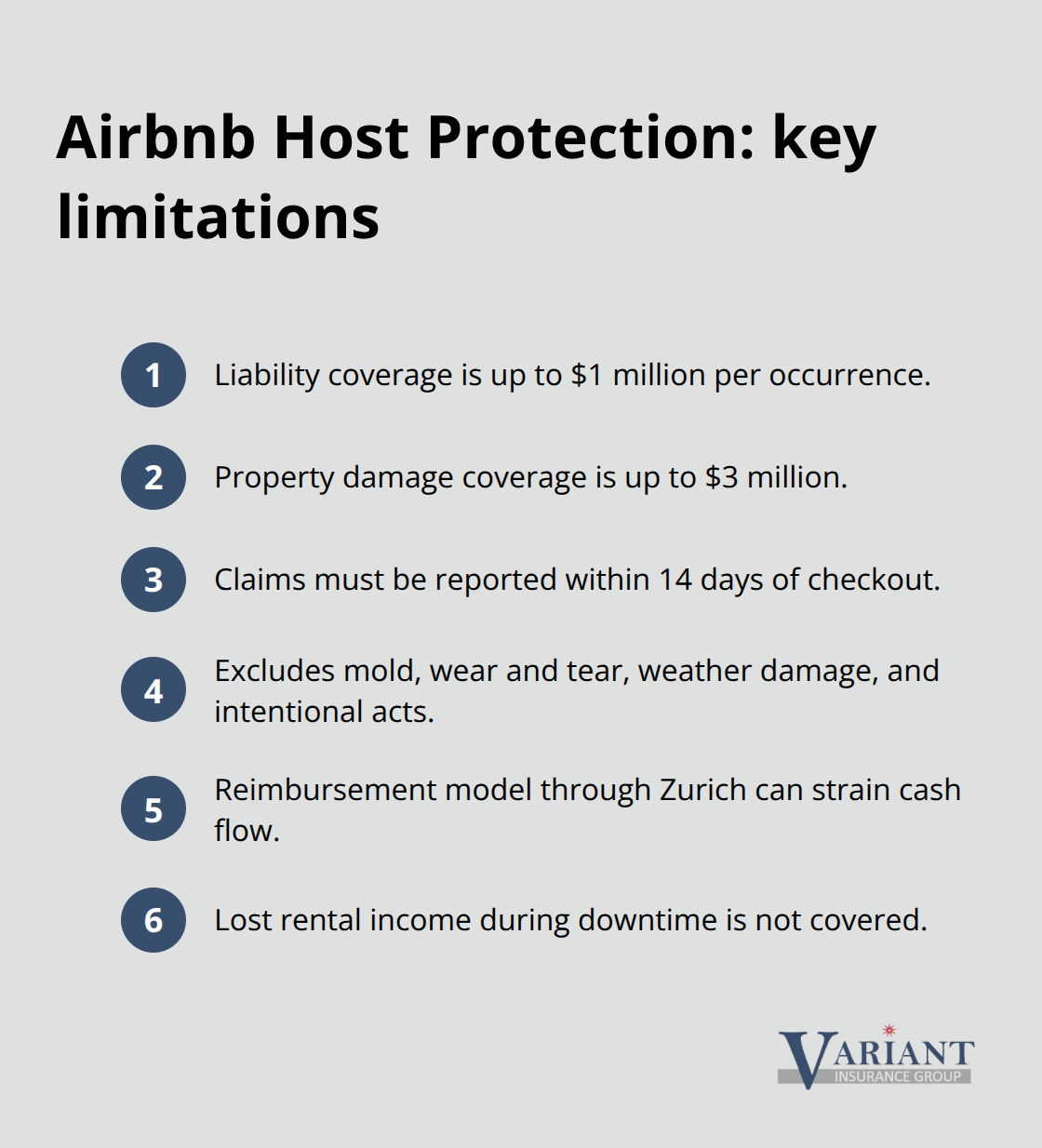
For a Minnesota host operating in peak season, losing even 10 days of bookings at $250 per night equals $2,500 in uncompensated losses. Airbnb’s protection also doesn’t cover off-premises guest activities, such as injuries from guest use of kayaks, bikes, or equipment you provide. Coverage only applies to direct guest responsibility, not pipe bursts or other property failure.
Municipal Requirements Make Dedicated Coverage Essential
Many Minnesota municipalities now require proof of dedicated host insurance to issue short-term rental permits, making Airbnb coverage alone insufficient for legal operation in Minneapolis, Saint Paul, Duluth, and Rochester. This regulatory shift reflects growing recognition that platform-provided coverage leaves gaps that expose both hosts and municipalities to uncompensated losses.
Dedicated Short-Term Rental Policies Close Critical Gaps
Dedicated short-term rental policies provide liability protection up to $2 million and directly address coverage gaps by protecting actual lost income during repairs with no payout limits. These standalone policies typically pay replacement cost rather than depreciated value, so damaged furnishings or appliances are replaced at current prices, not reduced by age.
A host with a $400,000 property and $100,000 in furnishings should expect premiums between $1,200 and $2,500 annually depending on guest volume and amenities, but a single denied Airbnb claim or week of lost summer bookings pays for years of coverage. Dedicated policies extend liability to guest activities away from your property, protecting you when guests suffer injuries from equipment or activities you facilitate.
Umbrella Coverage Protects Against Catastrophic Claims
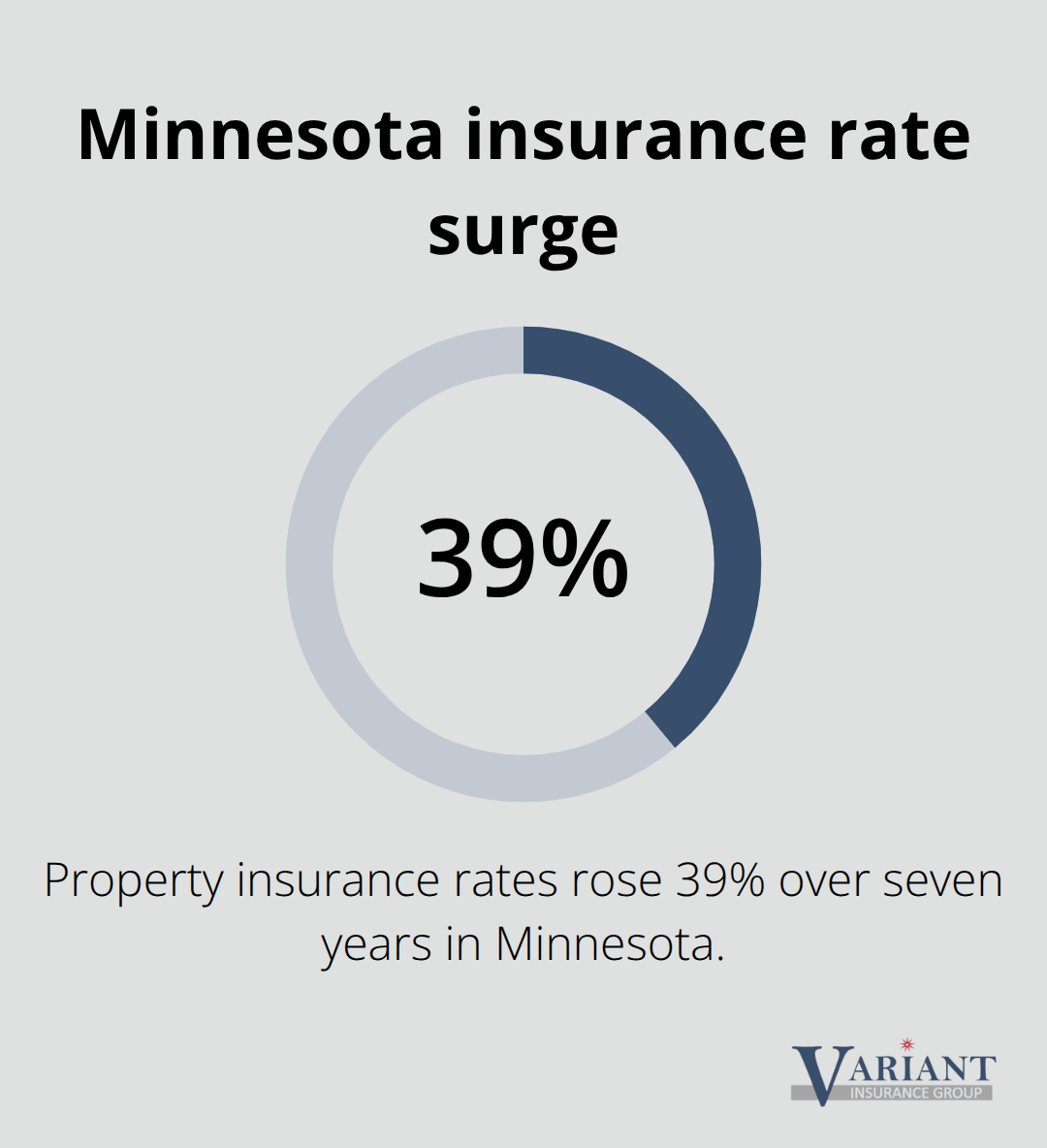
Umbrella or excess liability policies add another $1 million to $5 million in protection above your base liability limits, protecting you if a serious injury judgment exceeds your primary coverage. Minnesota’s property insurance rates rose 39 percent over seven years according to Capstone Insurance Group, and a single 2023 storm caused roughly $1 billion in insured losses across the Twin Cities and central Minnesota, showing why higher limits matter.
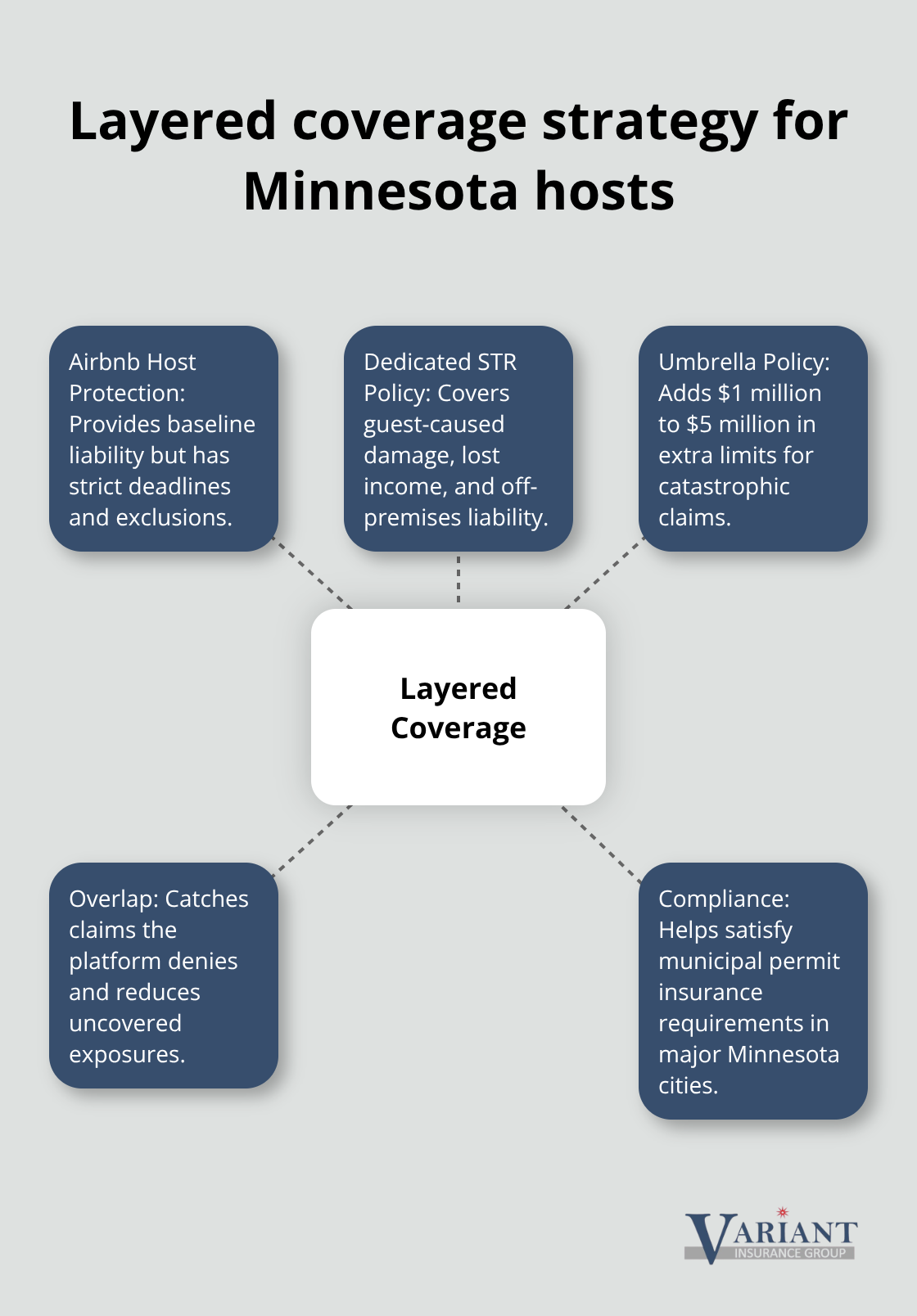
The most effective strategy layers Airbnb’s automatic coverage with a dedicated short-term rental policy that covers guest damage, lost income, and off-premises liability, then adds umbrella coverage if you own multiple properties or host frequently. This layered approach ensures that no single claim type-whether property damage, liability, or lost income-leaves you financially exposed. Understanding how these three coverage types work together helps you build a protection strategy that matches your actual risk exposure and Minnesota’s specific hazards.
How to Choose the Right Liability Coverage
Calculate Your Property and Income Exposure
Selecting the right liability coverage requires calculating your specific exposure rather than guessing at what sounds adequate. Start by documenting your property’s replacement cost, including the building structure, furnishings, appliances, and any amenities like hot tubs or fire pits that increase liability risk. A $400,000 property with $100,000 in furnishings needs different coverage limits than a $250,000 condo with minimal upgrades. Next, calculate your peak-season rental income by multiplying your nightly rate by the number of days you typically book during your busiest months. If you rent at $250 per night and book 20 days monthly during summer, losing even two weeks to repairs costs $3,500 in uncompensated income. This number directly determines how much income protection you need in your policy.
Match Coverage to Guest Volume and Property Type
Your guest volume and property type significantly affect your liability exposure. A single-family home hosting 30 guests annually in Brainerd Lakes Region faces different exposure than a downtown Minneapolis condo with 100+ guest turnovers per year. Higher turnover means more opportunities for accidents, property damage, and liability claims, so premiums reflect this reality. Document whether you provide equipment like kayaks, bikes, or snowmobiles, since guest injuries from these items require off-premises liability coverage that standard policies often exclude. Minnesota’s seasonal hosting patterns create additional complexity. Winter properties face icy walkway liability and heating system failures, while summer rentals risk fire pit injuries and water damage from heavy storms. Hail and wind damage from severe storms can exceed $15,000 per incident, demonstrating why weather-related coverage matters for Minnesota hosts specifically.
Compare Total Cost of Ownership, Not Just Premiums
When comparing policies, calculate total cost of ownership rather than focusing solely on premiums. A policy charging $1,500 annually with a $1,000 deductible and actual cash value settlement costs far more on a real claim than a $2,000 annual policy with a $500 deductible and replacement cost coverage. Request quotes from multiple carriers and explicitly ask whether each policy covers guest-caused property damage, lost rental income with no payout limits, and off-premises guest activities. Verify that your coverage applies during vacancy periods, which matters for Minnesota’s seasonal hosting patterns when properties sit empty between peak seasons. Many policies exclude mold, wear and tear, and weather-related damage, so read exclusions carefully and ask your agent how these apply to your specific situation.
Work with a Local Agent to Navigate Minnesota Requirements
A local agent who understands Minnesota’s municipal requirements, seasonal risks, and short-term rental regulations saves time and catches coverage gaps that online quotes miss. Your agent should explain how your Airbnb Host Protection Insurance layers with dedicated short-term rental coverage and whether umbrella policies make sense for your portfolio. If you own multiple properties or host frequently, umbrella coverage adding $1 million to $5 million in additional protection typically costs $300 to $800 annually and provides critical safeguards against catastrophic claims exceeding your base liability limits. At Variant Insurance Group, we shop Minnesota’s top-rated insurance companies to compare protection and pricing across carriers, ensuring you understand what each policy actually covers before committing.
Final Thoughts
Running an Airbnb in Minnesota requires layering your protection strategically because Airbnb’s built-in coverage alone leaves you exposed when claims matter most. A guest injury, property damage claim, or lost income during repairs can eliminate months of rental profits if you haven’t combined Airbnb’s automatic Host Protection Insurance with a dedicated short-term rental policy that covers lost income, guest-caused property damage, and off-premises guest activities. Adding umbrella coverage protects you against catastrophic claims exceeding your base liability limits, and this approach satisfies the permit requirements that Minneapolis, Saint Paul, Duluth, and Rochester now enforce.
Your next step involves calculating your actual exposure by documenting your property’s replacement cost, estimating your peak-season rental income, and identifying which amenities or guest activities create additional liability risk. Request quotes from multiple carriers that specifically cover short-term rentals in Minnesota, and compare total cost of ownership rather than just premiums-a policy with higher premiums but better coverage and lower deductibles often costs far less on a real claim than a cheaper plan with gaps. Verify that each quote covers guest-caused property damage, lost rental income with no payout limits, and off-premises guest activities, since these protections separate adequate Airbnb liability coverage Minnesota policies from inadequate ones.
We at Variant Insurance Group shop Minnesota’s top-rated insurance companies to compare your options and find the protection that matches your specific situation. Contact us to review your current protection and build a strategy that protects your assets before a claim exposes gaps in your policy, or visit our short-term rental insurance guide to learn more about layering coverage effectively.
Disclaimer: The information provided in this blog is for general informational purposes only and does not constitute legal, financial, or insurance advice. Coverage options, terms, and availability may vary. Please consult with a licensed professional for advice specific to your situation