

Construction projects in Minnesota face real obstacles-worker injuries, weather delays, and unexpected costs can derail timelines and drain budgets fast.
At Variant Insurance Group, we’ve seen how the right construction risk management strategy protects both your team and your bottom line. This guide walks you through the risks you’ll actually encounter and the insurance solutions that matter.
What Risks Actually Cost Your Construction Projects
Labor Shortages and Safety Gaps
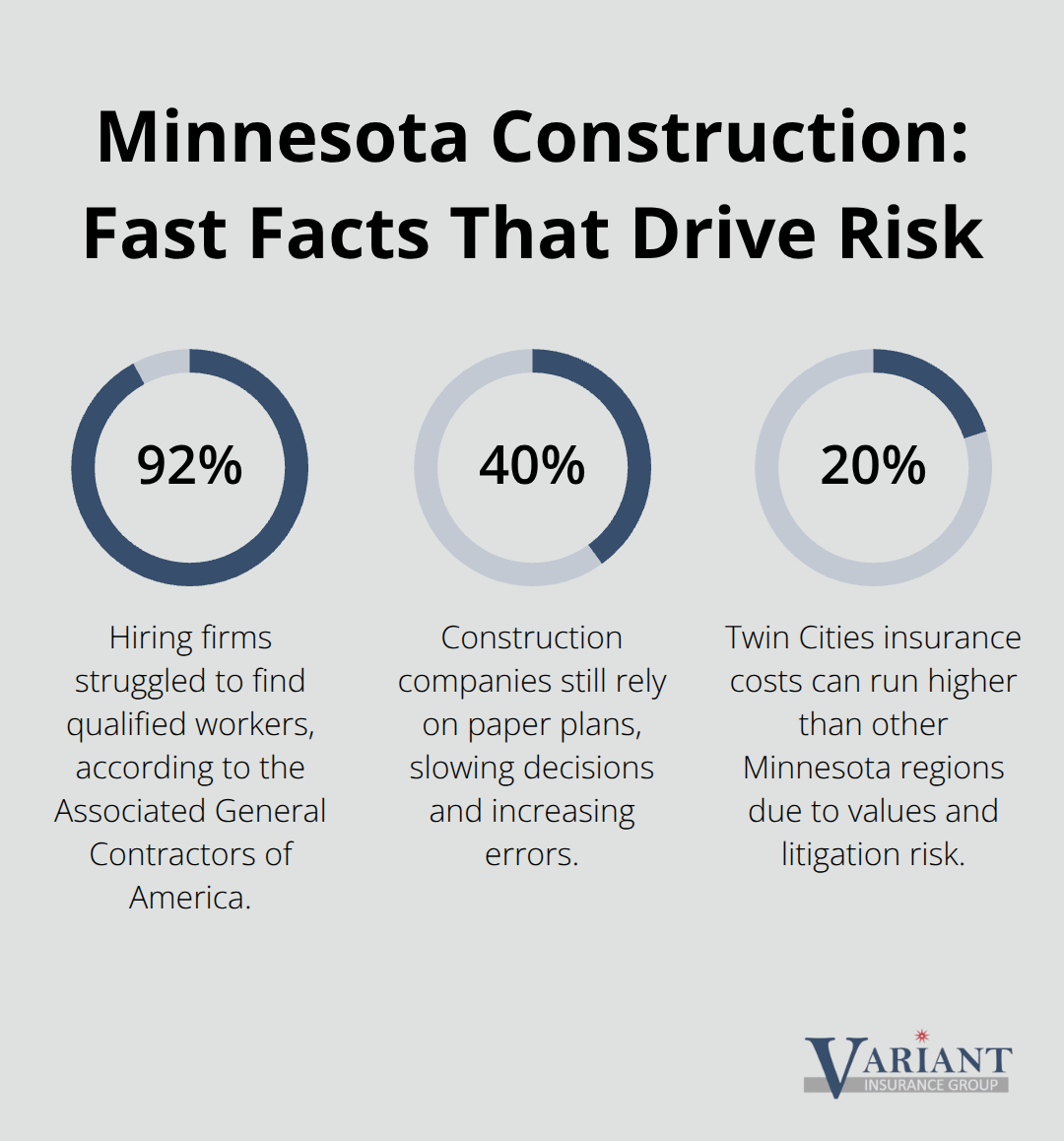
Labor shortages hit Minnesota construction harder than most states. 92% of hiring firms struggled to find qualified workers, according to data from the Associated General Contractors of America. When you can’t fill positions, projects slow down, timelines slip, and costs climb. Safety hazards compound this problem-language barriers on diverse job sites create real danger.
A worker who doesn’t understand safety instructions in their native language becomes a liability you can’t ignore.
The True Cost of Claims and Water Damage
Allianz Global Corporate & Specialty analyzed 29,640 construction and engineering claims between 2016 and 2020, documenting insured losses of roughly 11.3 billion euros. Water damage emerged as a major loss driver, particularly on weekends and after hours when faulty connectors or pipes go unnoticed. These aren’t theoretical risks-they happen on Minnesota job sites right now, and they cost money fast.
Weather, Materials, and Margin Erosion
Weather delays and material price swings create unpredictability that destroys margins. Extreme weather events drive higher insured losses across the industry, and Minnesota’s winters add specific exposure most contractors underestimate. Material price volatility threatens profitability directly-you need contingencies built into contracts and pricing strategies ready to absorb spikes.
Disputes, Documentation, and Scope Failures
The real damage comes from poor project management and unclear scope. The Arcadis 2024 Global Construction Disputes Report found that construction disputes average 43 million dollars in value and last 14.4 months. Most disputes stem from miscommunication and inadequate documentation, not disagreements about intent. Change orders pile up when scope isn’t crystal clear from the start, and each change order becomes a fight if you haven’t documented everything properly. Budget overruns happen because contractors accept ambiguous lumpsum contracts instead of pushing back on unclear specifications. You need cost-plus approaches or detailed scope documents before you break ground.
Moving Beyond Paper Plans
About 40% of construction companies still rely on paper plans. Moving to mobile-first documentation reduces delays and human error immediately, giving you better cost control and faster decision-making when problems surface. Once you understand where your actual exposures lie, the next step involves selecting the right insurance protections to cover what you can’t prevent.
What Insurance Coverage Actually Protects Your Construction Business
General Liability: Your First Line of Defense
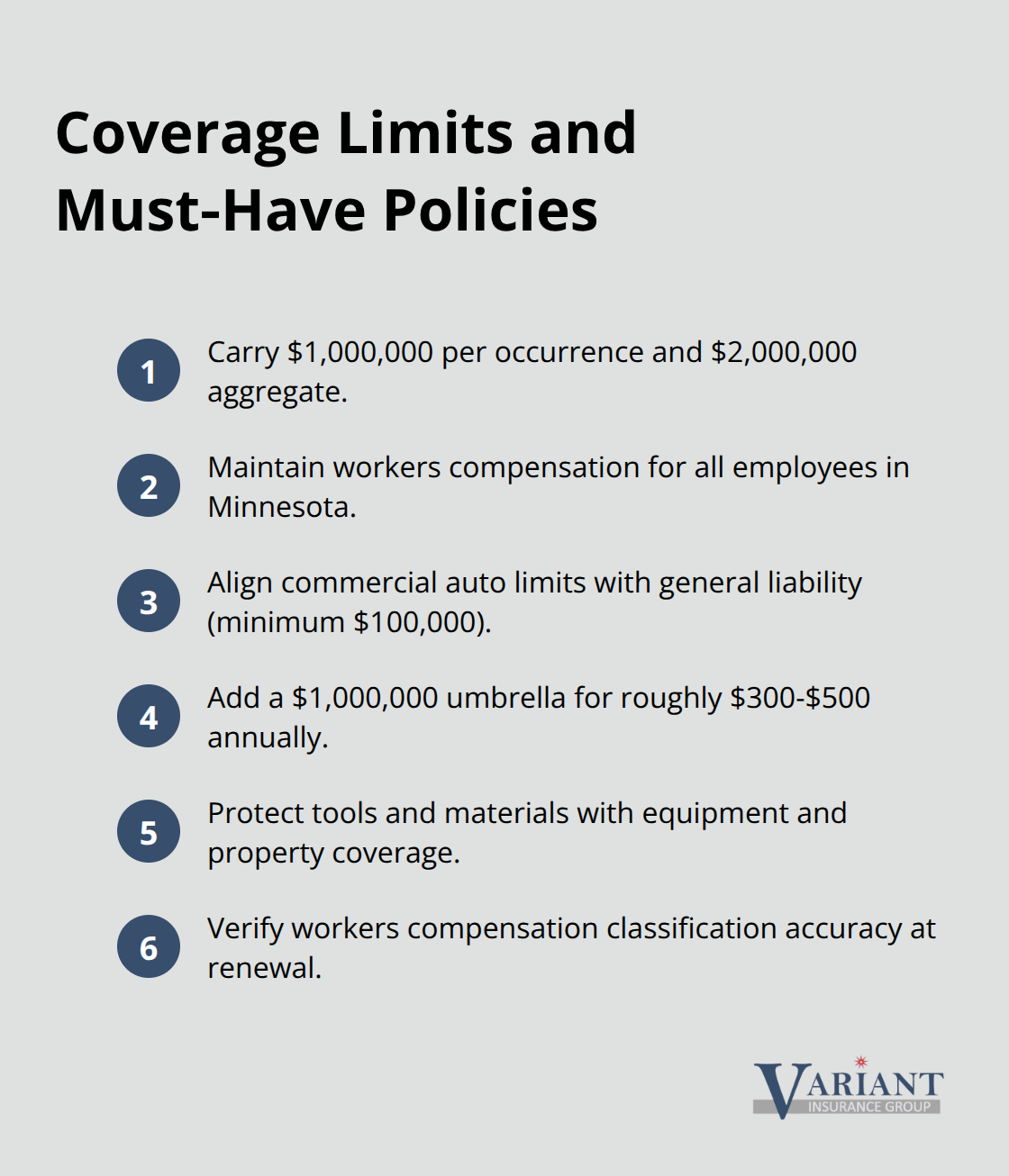
General liability coverage protects you when a third party claims injury or property damage from your work. Minnesota requires a minimum of $50,000 per occurrence, but that baseline is dangerously low. Typical construction claims exceed $500,000, which means you need $1,000,000 per occurrence with at least $2,000,000 aggregate for projects over $500,000.
Without adequate limits, a single incident wipes out profit margins or forces you into personal liability.
Workers Compensation and Classification Accuracy
Workers compensation coverage is mandatory in Minnesota for all employees and covers medical expenses, lost wages, and rehabilitation costs when workers get hurt on site. Workers compensation classification accuracy matters enormously when you renew your policy. Incorrect classifications can double your annual premium costs, making verification during renewals a financial priority.
Equipment, Property, and Water Damage Protection
Equipment and property coverage protects your tools, machinery, and materials from theft, weather damage, and on-site loss. Water damage claims spike on weekends and after hours when faulty connectors go undetected, so robust coverage combined with strong shut-off protocols and proactive system checks prevents expensive losses. This combination of insurance and operational discipline stops small problems from becoming catastrophic ones.
How Claims History and Location Shape Your Costs
Your claims history directly impacts what you pay. Zero claims over three years yields a 15 to 25 percent premium discount, while multiple claims can double your premiums through surcharges. Location within Minnesota matters too, with the Twin Cities sometimes running 20 percent higher than other regions due to property values and litigation risk. Commercial auto liability requires a minimum $100,000 in Minnesota, but align it with your general liability coverage for consistency.
Maximizing Coverage While Managing Costs
Umbrella policies add $1,000,000 in extra limits for roughly $300 to $500 annually and apply above your primary policies across general liability, auto, and employer liability. Five factors drive your cost: workers compensation classification codes, claims history, business size, geographic location within Minnesota, and credit score. Poor credit raises premiums by roughly 10 to 15 percent, so address that before shopping for coverage. An independent insurance agent can reduce your total premiums by 15 to 25 percent through competitive bidding across multiple carriers, and they handle the complexity of wrap-up policies and zero-exposure disclosures now required starting January 2026 for large projects. Once you lock in the right coverage at the right price, the real work begins-implementing the operational practices that prevent claims from happening in the first place.
Stop Claims Before They Happen
Build Safety Accountability Into Daily Operations
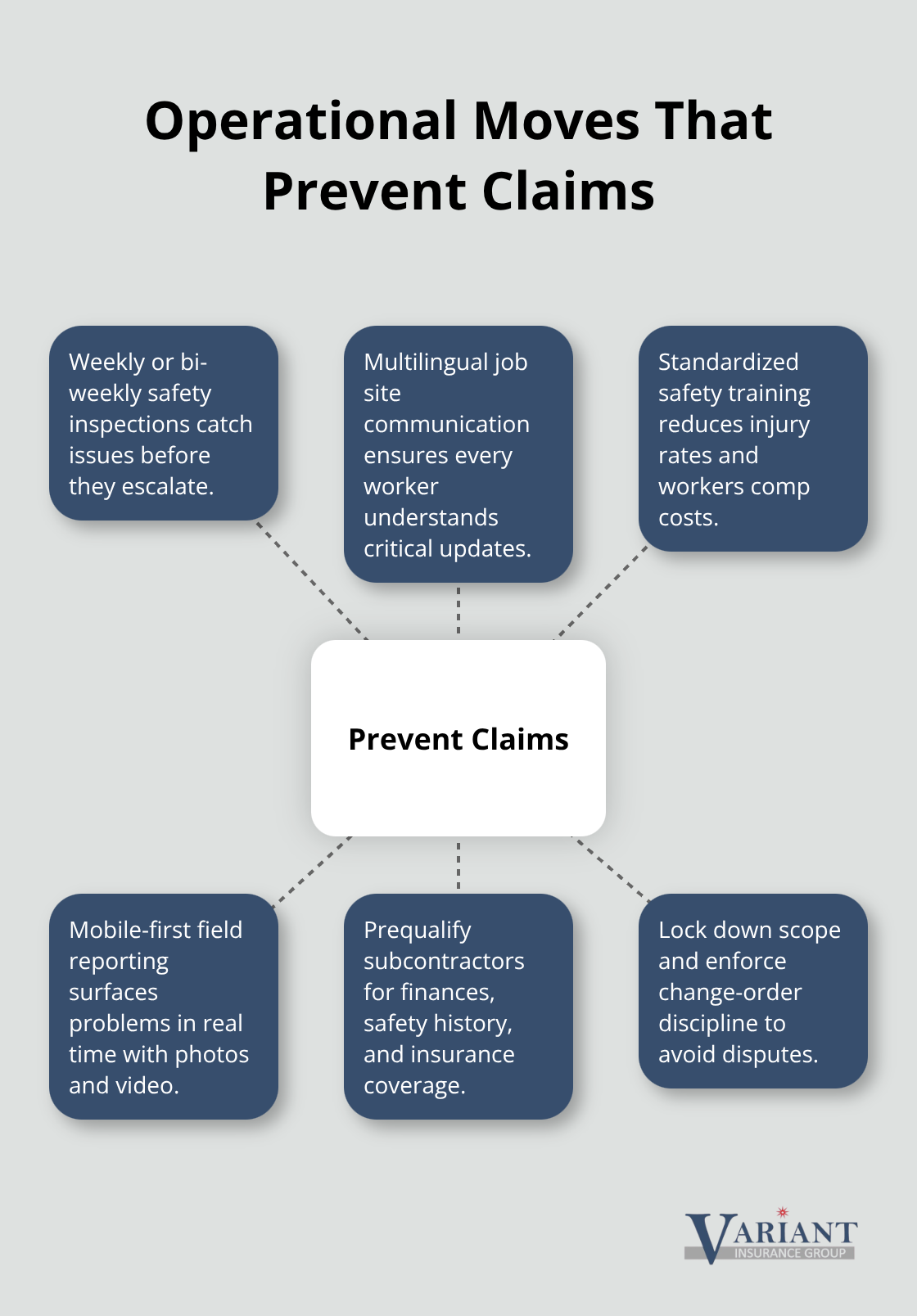
Insurance protects you after something goes wrong, but real cost savings come from preventing incidents in the first place. Safety protocols mean nothing if workers don’t follow them consistently, so build accountability into your daily operations. Assign one person ownership of safety compliance on each project and hold them responsible for enforcement, not just paperwork. Language barriers on job sites create genuine danger-provide multilingual safety materials and use real-time mass communication systems to reach every worker in their native language when critical updates go out. This isn’t soft management; it’s risk reduction.
According to the Bureau of Labor Statistics, electrical contractors pay roughly 40 percent more for workers compensation than general construction crews because injury rates run significantly higher. That premium gap disappears when you implement standardized safety training and consistent site protocols. Conduct inspections weekly or bi-weekly rather than waiting for monthly reviews-problems surface fast on construction sites, and catching water damage or equipment failures within days instead of weeks prevents catastrophic claims.
Document Everything and Control Change Orders
Walk the site yourself and photograph conditions regularly; this documentation becomes invaluable if disputes arise later. Mobile-first field reporting systems let workers submit standardized reports with photos and videos immediately rather than waiting until end-of-day or end-of-week, which means you catch issues when they’re still manageable and inexpensive to fix.
Documentation discipline separates contractors who control costs from those who bleed money through change orders and disputes. The Arcadis 2024 Global Construction Disputes Report shows disputes last an average of 14.4 months and cost 43 million dollars, but most disputes stem from inadequate documentation, not genuine disagreements.
Every change order requires written approval and sign-off before work begins-no exceptions. Maintain a clear audit trail showing what was requested, approved, and completed, then file it where your entire team can access it immediately.
Lock Down Scope Before You Break Ground
Unclear scope invites cost overruns because contractors accept ambiguous lumpsum contracts instead of demanding detailed specifications upfront. Push back on vague contracts and use cost-plus approaches when scope isn’t locked down completely. Weekly communication with owners, designers, subcontractors, and suppliers catches emerging risks before they derail schedules. These meetings should focus on what’s changed since the last conversation, what’s coming next week, and what’s already causing delays or quality issues.
Prequalify Partners and Strengthen Project Management
When you prequalify subcontractors using platforms that assess their finances, safety history, and insurance coverage, you eliminate unreliable partners before they create problems on your site. Poor project management and miscommunication create ripple effects that compound throughout the timeline, so implement disciplined processes and strong change order controls from day one.
Your claims history directly impacts what you pay for insurance-zero claims over three years yields a 15 to 25 percent premium discount, while multiple claims trigger surcharges that can double your costs. That financial incentive aligns perfectly with operational reality: preventing incidents saves money immediately and compounds savings every year through better premium rates.
Final Thoughts
Construction risk management requires constant attention, not a one-time fix that you implement and forget. Your insurance coverage-general liability, workers compensation, equipment protection, and umbrella policies-creates the financial backbone that protects your business when incidents occur. Minnesota’s state minimums leave you exposed since typical claims exceed $500,000, so contractors who win in this market carry $1,000,000 per occurrence with adequate aggregate limits and align their auto coverage accordingly.
The real competitive advantage comes from what you prevent before claims happen. Weekly safety inspections, multilingual job site communication, detailed documentation of every change order, and prequalified subcontractors eliminate most expensive problems that derail timelines and margins. Your claims history directly impacts your insurance costs, so preventing incidents saves money twice: immediately through avoided losses and continuously through better premium rates year after year.
We at Variant Insurance Group work with Minnesota construction contractors to build coverage strategies that match your actual exposures rather than just state minimums. We shop Minnesota’s top-rated carriers to find the right protection at the right price, and we handle the complexity of wrap-up policies and regulatory disclosures so you focus on running projects. Contact us today to review your current coverage and identify gaps before they become expensive claims.
Disclaimer: The information provided in this blog is for general informational purposes only and does not constitute legal, financial, or insurance advice. Coverage options, terms, and availability may vary. Please consult with a licensed professional for advice specific to your situation